Posted by Matthew Boedy
Welcome to the Moment of Truth, the thirst that is the drink.
Over twenty years ago, I started a project I’m still working on, documenting the life and work of an artist, Resh Shaprudhi, who used iconography around the god from the purana literature of what is now Hinduism, the god called Ganesh, or Ganapathi, or Vinayaka, or any number of other names, to explore the nature of oppression. Part of Resh Shaprudhi’s mythos is how and why Ganesh enters the events of the European genocide of WWII, often known as the Holocaust, and how through Ganesh’s intervention, the God of the Jews and the gods of the Hindus agree to bestow moksha upon the impoverished and oppressed. Moksha is the release of the soul from the cycle of metempsychosis, or reincarnation. It’s considered a good thing, to be released from that cycle.
If you’re not familiar with Ganesh, he’s the chunky god with the head of an elephant. He’s really easy to pick out of a crowd. A big part Resh Shaprudhi’s work involved syncretically assembling images, language, and symbols from Hinduism, Judaism, and the European genocide in World War II. So a lot of the art created by Shaprudhi involves Ganesh appearing in scenes of Nazi labor and death camps.
Coincidentally, about a decade-and-a-half after I started working on the Resh Shaprudhi project, an Australian play was touring the world called, “Ganesh Versus the Third Reich,” created by Back to Back theater company. The conceit was this: a theater company is in the process of putting together a stage play about Ganesh coming to Earth to recapture the swastika from the Nazis, who’d misappropriated it. I’m not sure if I was ever in a position to see this work. 2013, the year it toured, was also the year I was in India on the set of a movie, and after the shoot traveling through India, Thailand, and Laos.
Recently I decided to go back into the project, and encountered some clippings on the Back to Back play. I was barely familiar with the company’s esthetic, which is political, experimental, and purposely provocative. The theater company to which I claim membership, Theater Oobleck, boasted a similar esthetic back then. It may still, I don’t know. I know we considered art to be less interesting if it didn’t in some way transgress the everyday.
Back to Back is a company the majority of whose membership are disabled,... read more
Posted by Matthew Boedy
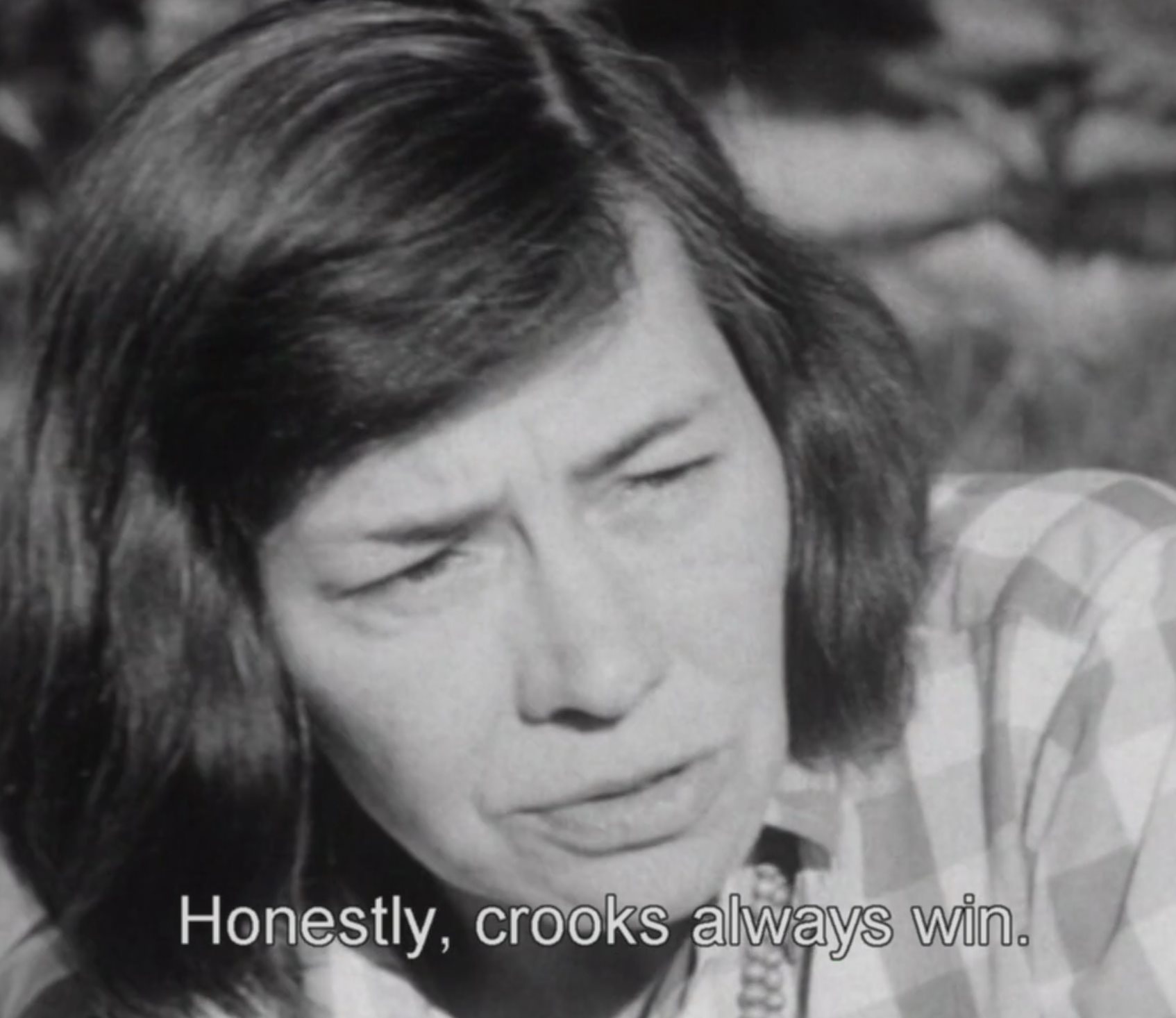
Patricia Highsmith, 1921-95, was the author of the Talented Mr. Ripley series of books, among other fiction, including probably the only lesbian love story of its time wherein the protagonists aren’t dead or arrested at the end. Graham Greene, who could really write a book, called Patricia Highsmith “the poet of apprehension.” In those days, whenever that was, there existed an informal fraternity of genre writers, and popular writers in general, and Highsmith was both. She was also a lifelong drunk – kudos to her for sticking with it – another literary fraternity one could inhabit. And she was queer as an anaconda is long.
She was also a proud anti-Semite who wished Hitler had done a more thorough job of it. She wore the label “Jew-hater” proudly. And she did support the Palestinian cause. So, if you ever wonder how anyone dare slur people with the charge of anti-Semitism just for supporting Palestinians, just remember that Patricia Highsmith existed and lent her bad name to that particular political stance.
She also vocally avowed hatred for black people, the welfare state, speakers of the Romance Languages and of Latin persuasion, Greeks, Indians (both the Western indigenous and subcontinental varieties), men, and women.
She was also in the literary fraternity of compulsive fornicators. The Belfast Telegraph called her a “Nympho, racist crime writer” just this past January. I didn’t even know nympho was still a word.
And she opined that human pregnancies should be aborted, and the fetal remains used to feed animals. Literary misanthropes were another fraternity one could belong to, although they tended not be able to stand each other’s company. So, it might be more proper to call it an individual avocation than any kind of siblinghood.
She preferred to have affairs with well-heeled women who were either married or in relationships. She enjoyed breaking up lesbian couples.
I have been reading, in no particular order, but almost reverse chronologically, the five books known as “The Ripliad.” I became interested in Highsmith’s Tom Ripley character after seeing “The Talented Mr. Ripley” starring Matt Damon in the title role. It’s not the first time that particular novel has been adapted to the screen. In 1960 it was made into a film, “Plein Soleil,” (English title, currently, “Purple Noon”)... read more